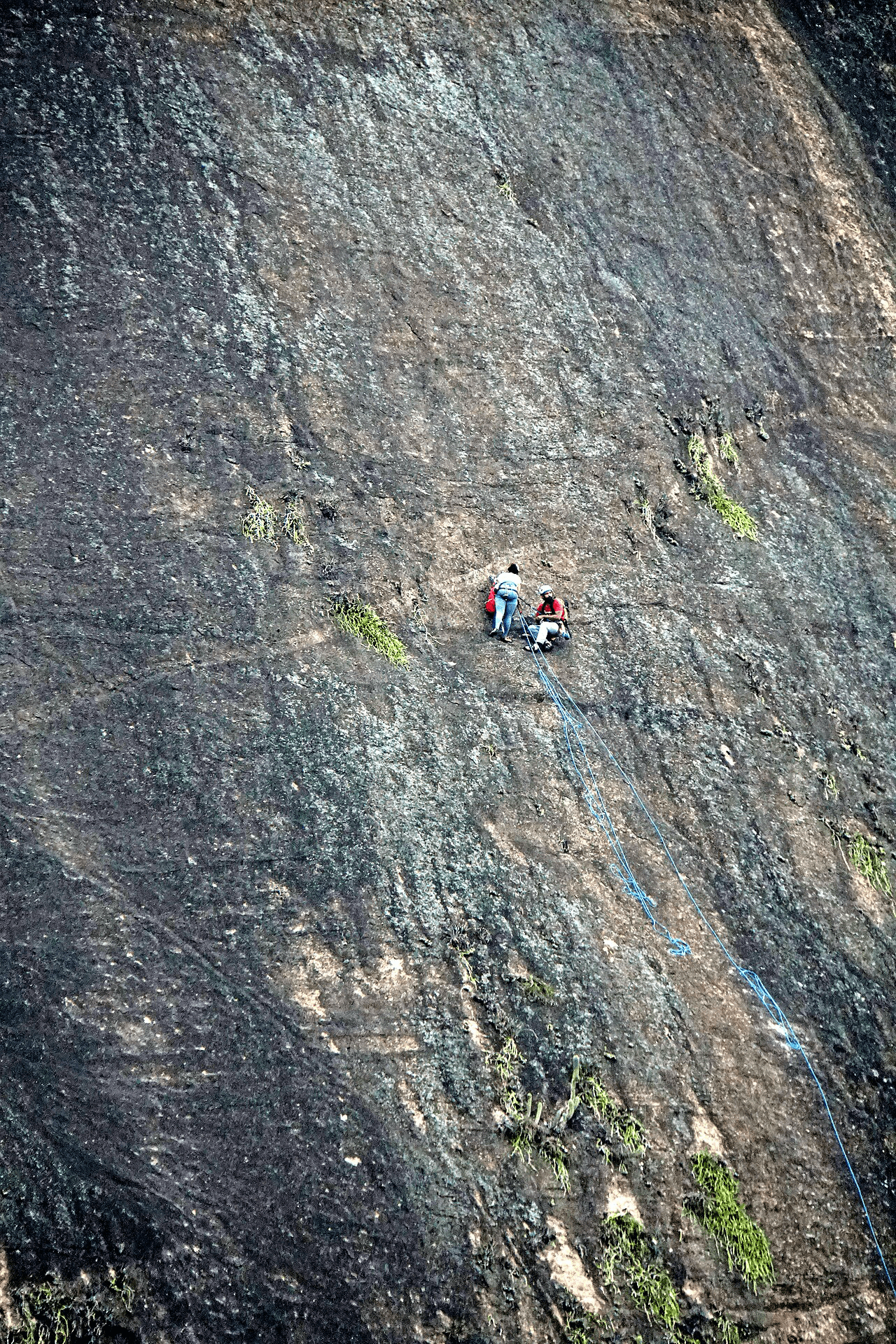
Brazil has world-class rock.
This is how you climb it.
Most climbing guides to Brazil are either in Portuguese or embarrassingly vague. This one tells you the grade, the approach, the rack, the nearest hospital, and where to eat after.
Build Your Trip
How long do you have? Where do you want to go?

Sugarloaf Morning Burn
Rio de Janeiro
1 route · Intermediate — comfortable 5.10

Pai Inacio Sunset Scramble
Lencois
1 route · Approachable intermediate — any 5.8 climber comfortable

Farofa Waterfall Slab + Swim
Santana do Riacho or BH day trip
1 route · Moderate — 5.9 sport

Pedra da Gavea — Rio's Crown Jewel
Rio de Janeiro
1 route · Strong intermediate — comfortable at 5.9, physically fit

Pedra Azul — The Blue Dome
Domingos Martins
1 route · Intermediate — 5.9 multi-pitch experience recommended

Rio Double Header: Urca + Gavea
Rio de Janeiro
2 routes · Intermediate — 5.9 multi-pitch + 5.10 sport

Serra do Cipo Progression
Santana do Riacho (pousada)
2 routes · Progressive — day 1 moderate, day 2 hard

Rio Climbing Grand Tour
Rio de Janeiro
3 routes · Intermediate+ — solid 5.10 sport required, some 5.11a trad on day 2
Top-Rated Routes
The three highest-rated climbs in Brazil, by climbers who have done them.

Morro Dois Irmaos — Northeast Ridge
★★★★★The two granite spires of Dois Irmaos overlook Ipanema and Leblon from the south — you've seen them in every Rio postcar…

Chapada Diamantina — Vale do Pati Sport Wall
★★★★★The Vale do Pati is Brazil's backpacking-plus-climbing objective — a 3-day hike-in wilderness valley with sandstone wall…

Pedra da Gavea — Via Normal
★★★★★Pedra da Gavea is the iconic granite massif that watches over Rio from the southwest. The Via Normal takes 8 pitches up …
Why this guide
There is no shortage of vague climbing blog posts about Brazil. This is something different.
Exact Grades
Both Yosemite Decimal System and French grades on every route, not vague difficulty ratings. Know exactly what you are getting into before the approach.
Nearest Hospital
Every route includes the hospital address and phone number for the base city. Brazil is safe to climb — and knowing where help is makes it safer.
Where to Eat After
Specific restaurants near each climb with honest price ranges in BRL. Because after 8 pitches you deserve a cold beer and good food, not a tourist trap.
Before you fly to Brazil
Learn Climbers' Portuguese in under an hour.
Brazilian climbers and guides speak Portuguese first — and the phrases that matter most at the crag are not in a phrasebook. Language Threshold's Climbers' Portuguese module covers the 60 expressions every visiting climber actually needs, with audio and drilling built for short sessions.
Onde ficam os primeiros socorros?
Where is first aid?
Qual é a graduação desta via?
What grade is this route?
Os grampos estão seguros?
Are the bolts safe?
Precisamos descer antes de escurecer.
We need to descend before dark.
Climber Reports
Real accounts from people who have done these routes.
"The single best view and hiking experience to be had in Rio. I would give it more than 5 stars if I could."
"When it comes to sport climbing, Serra do Cipo is far better than the areas in Rio. Sinos de Aldebaran is an incredible 45m climb — a great mind challenge and a remarkable experience."
"The view at the top of the mountain was breathtaking — the sea of clouds at sunset over Chapada is something I will never forget."
Four Regions
Each region has different rock, different logistics, different seasons.

Rio de Janeiro
3 routes — granite domes, sport, trad, multi-pitch above the city

Minas Gerais
2 routes — quartzite canyon walls inside Serra do Cipó National Park

Bahia
2 routes — sandstone mesas and sport walls inside Chapada Diamantina

Espirito Santo
1 route — the famous blue granite dome, 1,822m above the highlands
Common Questions
Things climbers ask before booking a Brazil trip.
Do I need to speak Portuguese to climb in Brazil?
Not for the routes covered here. Guide operators in Rio and Belo Horizonte speak functional to fluent English. For remote objectives like Vale do Pati, a local guide handles all communication. This guide includes the key Portuguese phrases for emergencies — learn those six before you go.
What is the best time of year to climb in Brazil?
April through October is the dry season — the correct answer for all four regions. Rio de Janeiro has the most forgiving window with some routes climbable year-round. Serra do Cipo peaks in June–August. Chapada Diamantina sandstone requires 3–5 days to dry after any rain — the wet season makes it genuinely dangerous.
Is climbing in Brazil safe?
Brazil's crags are safe. The risks are environmental — afternoon thunderstorms, heat, rockfall — not crime. All routes in this guide are established, with known approach trails and local guide networks. Vidigal (Dois Irmaos approach) requires a local guide, which is the community agreement that keeps the route accessible.
What grades should I climb before going to Brazil?
The routes in this guide range from 5.8 / 5b (Pai Inácio scramble) to 5.11b / 7a (Bandeirinhas). Comfortable outdoor leaders at 5.10 / 6a will access the majority of the listed routes. Pedra da Gávea and Dois Irmãos are committing multi-pitch objectives — solid seconding at 5.10 and leading at 5.9 minimum.
Can I bring my own rack or should I rent gear in Brazil?
Bring your own rope (60m dry-treated) and lead gear — do not rent those in Brazil. Harnesses, helmets, and shoes can be rented from guide outfitters in Rio and Belo Horizonte at R$20–35/day. Decathlon stores in major cities stock Simond gear at competitive prices if you need to replace anything.
How do I book a guided tour for Morro Dois Irmãos?
Dois Irmãos requires a guide — it is not optional. The approach runs through Vidigal, and the guide cooperative maintains the community agreement that keeps the route accessible. Use the contact form on this site and we will connect you with vetted guide operators in Rio.